Disclosure: Some of the links on this website are affiliate links. It's possible for me to receive a commission at no extra cost to you.
Quick answer: To clean a Roborock dirty water tank, pull it out of the dock, empty it, rinse with lukewarm water, and scrub the corners, lid seal, and float with a bottle brush or old toothbrush. Rinse again and air-dry it with the lid open. After every mopping job, do the quick rinse; weekly, hand-clean the tank and the dock’s removable tray or filter.
Rinsing the tank when you remember isn’t enough — the smell and the sludge come from the spots a quick rinse misses. Here’s the full routine, and how often each part actually needs doing.
What you need
- Warm water and your kitchen tap
- A bottle brush or an old toothbrush (for corners and the sensor)
- A drop of mild dish soap, only for the removable dirty tank and only if your manual permits it
- A soft cloth for the dock basin
Step by step
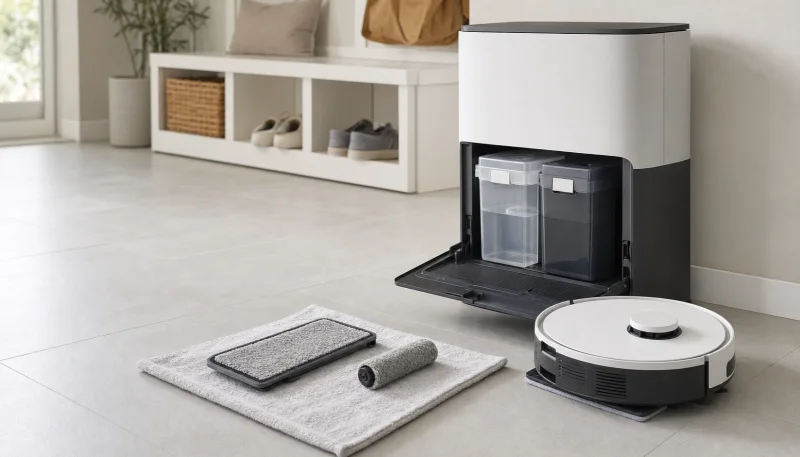
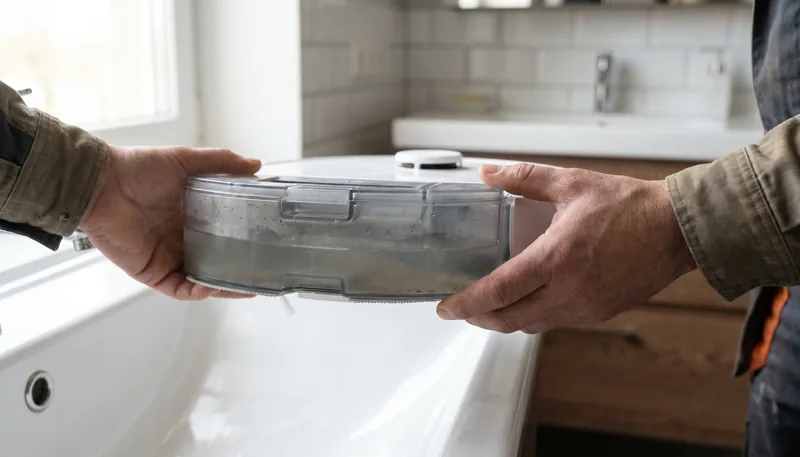
1. Remove the dirty water tank. On most Roborock docks the dirty water tank is the front or top reservoir — check your model, as the layout differs between the S-series, Qrevo and older units. Lift it straight out.
2. Tip out the used water. Empty it down the sink. Don’t let it sit — used mop water is the source of the smell, and the longer it stands the worse the tank gets.
3. Rinse under warm running water. Warm (not hot) water loosens the greasy film that mop water leaves behind. Swirl it around and tip it out two or three times.
4. Scrub the corners and the float sensor. This is the step people skip and it’s the one that matters. A bottle brush or toothbrush gets into the corners and around the little float/level sensor, where a grey-brown sludge collects. That sludge is bacteria — if you leave it, the tank smells again within a day. A drop of dish soap here helps break up the grease; rinse it out fully afterwards.
5. Wipe the lid and seal. The rubber seal and the underside of the lid trap grime and grow mould. Remove the seal only if the manual shows that it is removable; stretching or mis-seating it can stop the dock from pumping wastewater correctly.
6. Dry it with the lid off. Shake out the water and leave the tank to air-dry with the lid open before putting it back. A dry tank can’t grow the bacteria that causes the smell — this single habit prevents most repeat problems.
Clean the dock tray weekly
The tank is only one part of the dirty-water path. The dock’s mop-wash tray, drain filter, and basin collect the same floor residue. Once a week:
- Unplug the dock before removing or wiping parts.
- Lift out the removable tray and filter if your dock has them.
- Rinse those removable pieces with clean water and brush their slots.
- Wipe the fixed basin with a damp cloth, keeping liquid away from contacts and openings.
- Reassemble, restore power, and use the dock-cleaning control with plain water or the Roborock-approved solution for your model.
- Empty and rinse the dirty tank when the cycle finishes.
Roborock’s current general guidance says to use only Roborock cleaning solution in the machine. See can you put vinegar in a robot mop or Roborock? and what cleaning solution can you use in a Roborock? before adding anything else.
How often to clean each part
| Task | How often |
|---|---|
| Empty + rinse the dirty water tank | After every mopping run |
| Scrub corners + float sensor | Weekly |
| Dock tray, drain filter, and cleaning cycle | Weekly |
| Wipe lid, seal and dock wash tray | Weekly |
| Detailed lid, seal, float, and corner scrub | Monthly, or whenever a smell returns |
Keep it to that schedule and the tank stays clean and smell-free. Fall behind on the after-every-run rinse and the sludge builds faster than the weekly clean can keep up with. If the smell still creeps back between cleans, a waste-side deodorizer buys you slack — Best Roborock Dirty Water Tank Deodorizers compares what works.
Frequently Asked Questions
How often should I clean my Roborock dirty water tank?
Empty and rinse it after every mopping job. Once a week, scrub the corners and float, wipe the lid and seal, and clean the dock tray and drain filter. The quick rinse after each job prevents most sludge and odor.
Can I put the Roborock dirty water tank in the dishwasher?
No. Dishwasher heat can deform the tank or seal, and strong detergent can leave residue. Clean it by hand with lukewarm water and a bottle brush. Use a drop of mild dish soap only if the model manual permits it, then rinse completely.
What is the grey sludge in my Roborock dirty water tank?
It's bacterial biofilm — a mix of dirt, grease and bacteria from used mop water that collects in the corners and around the float sensor. Scrub it out weekly with a brush; if you leave it, the tank smells again within a day even after rinsing.
Should I use vinegar or bleach to clean the tank?
Start with water and physical scrubbing. Do not put vinegar, bleach, or household disinfectant through the clean tank or dock lines. Roborock says to use only approved Roborock solution in the machine. Follow the manual before using any chemical on the removed waste tank, and never mix bleach with vinegar.
Related Articles
- Roborock Dirty Water Tank Smells Bad? 6 Fixes That Work
- Roborock Smells Bad When Mopping? Here’s Why & the Fix
- Can You Put Vinegar in a Robot Mop or Roborock?
- What Cleaning Solution Can You Use in a Roborock?
- Roborock Water Tank Mold: How to Clean & Prevent It
- Best Roborock Dirty Water Tank Deodorizers