Disclosure: Some of the links on this website are affiliate links. It's possible for me to receive a commission at no extra cost to you.
Quick answer: Black or pink specks in a Roborock water tank are microbial growth or residue that needs to be removed, not covered with fragrance. Remove the tank, scrub the lid, seal, float, ports, and corners according to the manual, rinse thoroughly, and air-dry it. Do not send vinegar, bleach, or household disinfectant through the robot or dock lines.
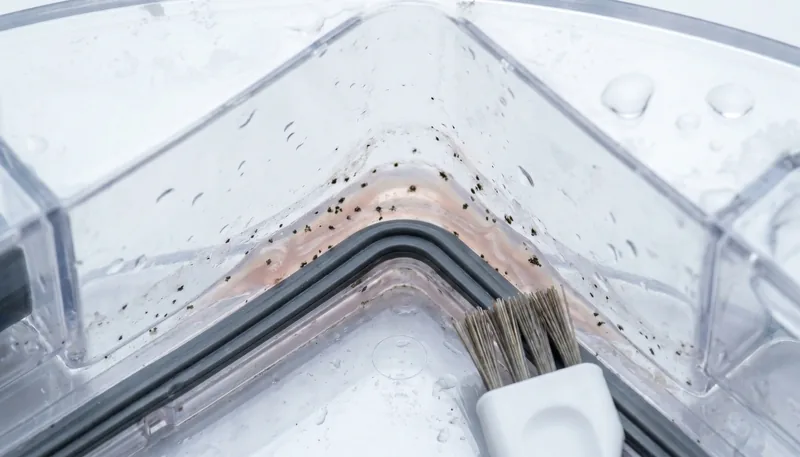
If you’ve spotted black flecks, a pink film, or fuzzy patches inside your Roborock’s water tank, that’s not dirt — it’s mold and bacteria. It thrives anywhere water sits still, and a robot mop tank is the perfect environment. Here’s how to get rid of it properly.
Black specks vs pink film — what’s the difference?
- Black specks / fuzzy patches are mold (mildew). They usually start in the corners, around the seals, and in the tank’s lid channels.
- Pink or orange film is Serratia marcescens, a very common bacteria that loves damp bathroom-and-tank environments. It’s harmless to clean but signals the tank is staying wet too long.
Both are treated the same way.
How to clean mold out of a Roborock water tank
- Empty the tank and remove any rubber stoppers, seals and the lid if they come off — mold hides under and around them.
- Check the manual before using a chemical. Roborock’s current general guidance says to use only Roborock-approved solution in the machine. Start with lukewarm water and the supplied cleaning tool; use mild soap on the removed reservoir only if the manual permits it.
- Scrub everything. A bottle brush or an old toothbrush gets into the corners, the inlet/outlet ports and the seal channels where growth clings. Don’t just rinse — the film needs to be physically removed.
- Repeat rather than mixing products. Empty, rinse, and scrub again if residue remains. Never mix bleach with vinegar or another acid because the reaction can release toxic chlorine gas.
- Rinse thoroughly with clean water until no cleaner or suds remain.
- Dry it completely before putting it back. Mold can’t grow on a dry tank — leave the lid off and let it air-dry fully.
Stop the mold coming back
Mold returns the moment water sits still again, so prevention is all about not letting that happen:
- Empty and rinse the tank after every run — the single most important habit.
- Dry the tank (lid off) when the robot won’t run for a day or more.
- Use only a model-approved module or solution. A deodorization module designed for the dirty reservoir is different from an unapproved pod dropped into the clean tank. On the clean side, stick to the official Roborock solution.
- Refresh clean water before a long-idle tank becomes stale.
- Wipe the seals with a damp cloth during the weekly clean and reseat them carefully.
If the tank smells as well as showing growth, work through Roborock Dirty Water Tank Smells Bad? 6 Fixes That Work too.
Frequently Asked Questions
What are the black specks in my Roborock water tank?
They may be mold, bacterial film, or residue growing on material left in a damp tank. Remove the tank, scrub the lid, seal, float, ports, and corners with water and the supplied tool, rinse completely, and air-dry it.
Why is there pink residue in my Roborock tank?
Pink or orange film is commonly associated with bacteria that thrive on damp surfaces, but color alone cannot identify a species. Remove the film physically, rinse the tank, and prevent it returning by emptying and drying wet parts promptly.
Is it safe to use bleach to clean a Roborock water tank?
Do not put bleach in the robot, clean tank, or dock water lines. For a removed dirty reservoir, follow the exact model manual before using any disinfectant. Never mix bleach with vinegar or another acid.
How do I stop mold growing back in my robot vacuum tank?
Empty and rinse the dirty reservoir after every mopping job, air-dry it with the lid open during long gaps, clean the dock tray and filter weekly, and use only model-approved solution or accessories.