Disclosure: Some of the links on this website are affiliate links. It's possible for me to receive a commission at no extra cost to you.
Quick answer: A Roborock smells bad when dirty mop water, damp pads, wet debris, or a clogged dock part sits long enough to sour. Start with when you smell it: a sewage-like odor while opening the dock points to the dirty water tank; a musty smell that follows the robot while mopping points to the pads; and a dusty or pet-like puff during auto-emptying points to the dust bag, bin, or air path.
Match the smell to the source first
| What you notice | Most likely source | First check |
|---|---|---|
| Swampy or sewage smell when the dock tank opens | Dirty water reservoir | Lid, seal, float, and tank corners |
| Musty or wet-dog smell during mopping | Mop pads | Remove and smell each pad after drying |
| Sour smell around the dock, even with the tank out | Mop-wash tray or drain filter | Lift the tray and check underneath |
| Dusty, pet, or stale-food puff during emptying | Dust bag, robot bin, or air duct | Replace the bag and inspect for damp debris |
| Hot rubber, melting plastic, or electrical smell | Motor, wheel, battery, or dock electronics | Stop using and unplug it |
Do not try to cover an electrical or burning smell with cleaner. Power the robot and dock off, move them away from anything flammable, and contact Roborock support.
1. The dirty water tank
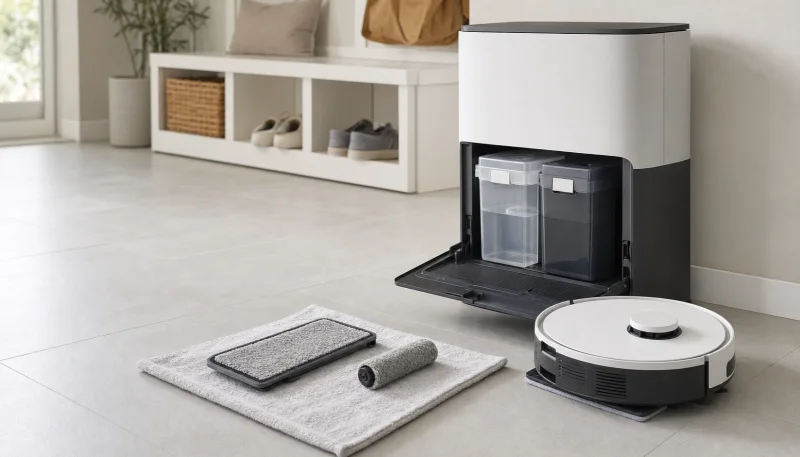
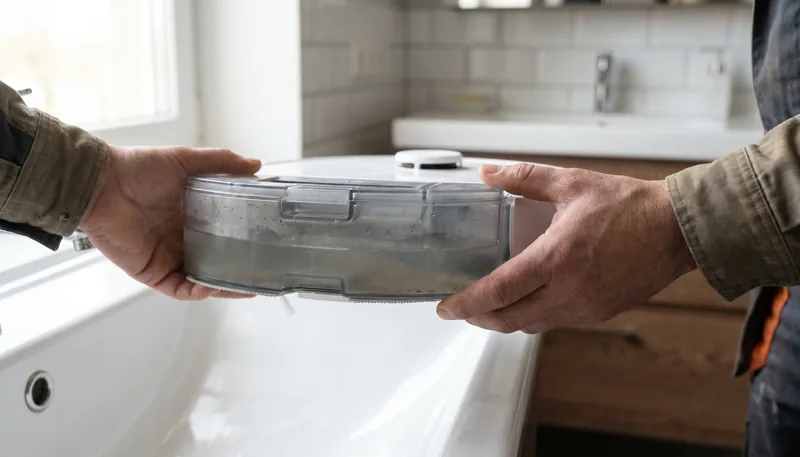
If your Roborock has a mop function with two tanks, this is where most of the funk lives. Dirty mop water sits in the tank between runs, bacteria multiplies, and a few days later you’ve got that distinctive swampy smell.
The fix is emptying it after every mopping job, not when it finally looks full. Shake it with clean water, then brush the underside of the lid, rubber seal, float, and molded corners weekly. The complete walkthrough is Roborock dirty water tank smells bad? 6 fixes that work.
If your tank supports one, a model-specific dirty water deodorization module can slow the odor between rinses. And if you spot black or pink specks in the tank, that’s microbial growth or residue that needs a deeper clean.
If you’ve already done the dirty-tank routine and your Roborock still smells, keep reading. The smell is coming from somewhere else.
2. The mop pads
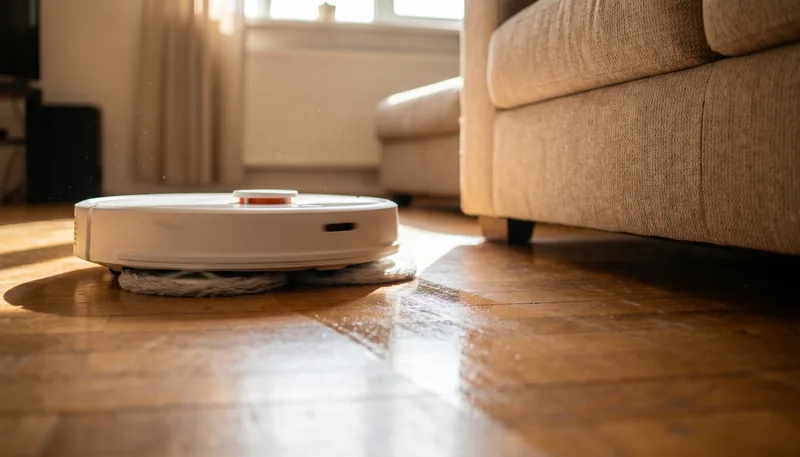
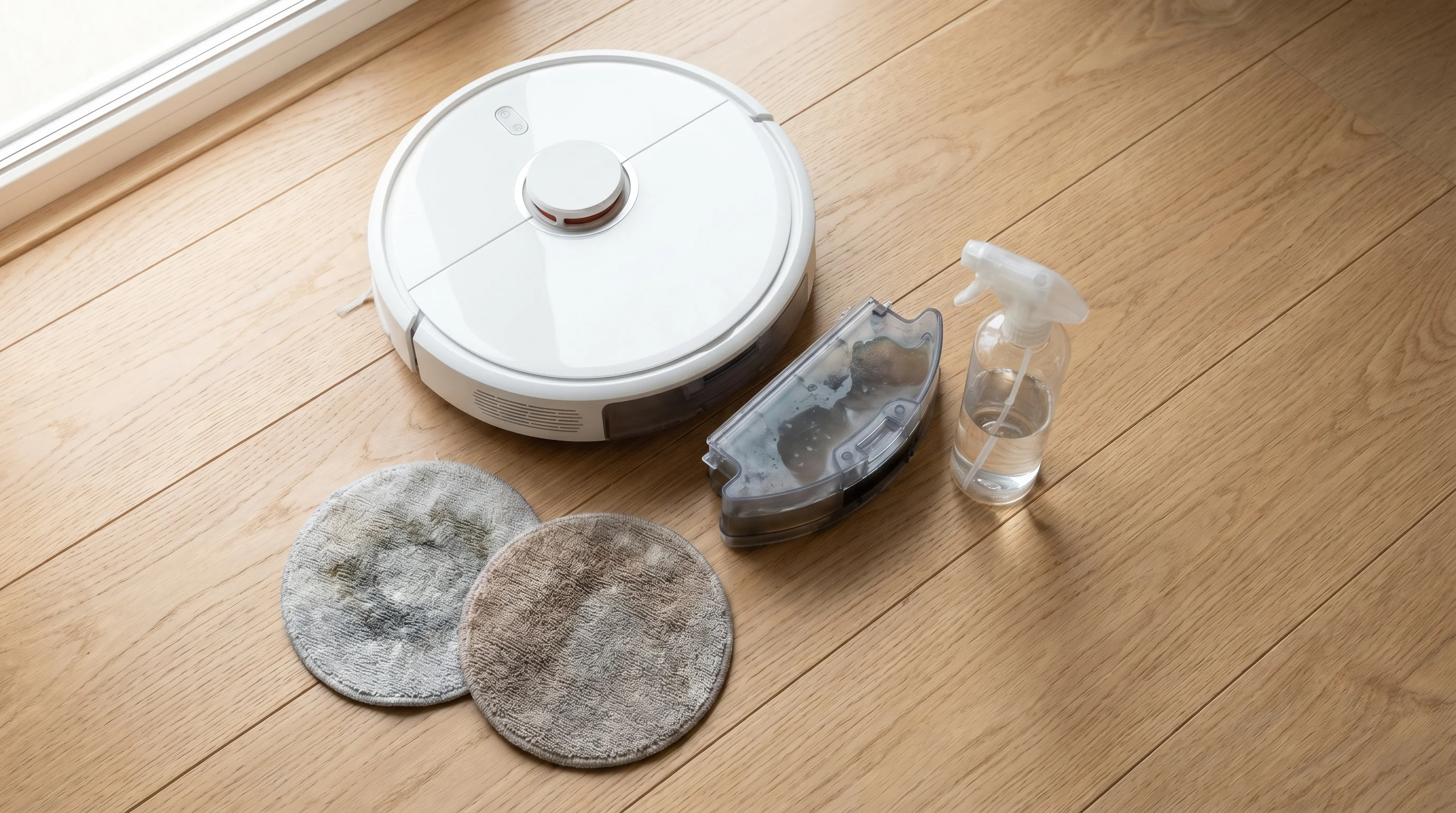
Mop pads stay damp for hours after a cleaning cycle. If the dock’s dryer ends too soon for the room’s humidity, they develop a musty, wet-dog odor separate from the swampy tank smell.
A quick test: remove the pads after the drying cycle, let them cool, and smell each one away from the dock. If the odor travels with the pad, extend dock drying in the app or air-dry the pads off the robot.
- Wash reusable pads weekly, following the pad label.
- Skip fabric softener because it coats the fibers and reduces absorbency.
- Rotate two sets so one can dry completely.
- Replace a pad that still smells after washing and drying.
Check shape and attachment style carefully when buying replacements. This Roborock replacement-parts listing covers Qrevo spinning pads, S7/S8 VibraRise pads, and compatible dock bags, but those parts are not automatically interchangeable—select the exact robot and dock before ordering.
3. The dock wash tray, filter, and drain
The dirty tank can be spotless while a thin layer of grey-brown residue stays under the mop-wash tray. On docks with a removable tray or filter, take those pieces out and rinse them according to the manual. Wipe the fixed basin with a damp cloth while the dock is unplugged; do not spray liquid into seams, contacts, or air openings.
If the tray refills after you clean it, the drain port or filter may be clogged. Fix the blockage instead of adding fragrance—the standing puddle will keep souring.
4. The robot dustbin and filter
Wet crumbs, damp pet hair, or debris picked up immediately after mopping can sour in the robot’s dustbin. Empty it, remove the filter, and check the auto-empty port.
Only rinse parts that the model manual marks as washable, then let them dry completely before reassembly. A damp filter can smell, restrict airflow, and spread fine debris farther into the air path.
5. Hair and residue around the brushes and wheels
Hair wrapped around the main brush, side brush, or wheel axles traps floor grime. Remove the brush cover, lift out the roller, cut away wrapped hair, and wipe the brush bay. Check the small front caster as well; it can hold a compact ring of hair and damp debris.
If you smell hot rubber or melting plastic rather than dirty laundry or sewage, stop. A jammed roller or wheel can overheat a motor or belt.
6. The auto-empty dust bag or bagless bin
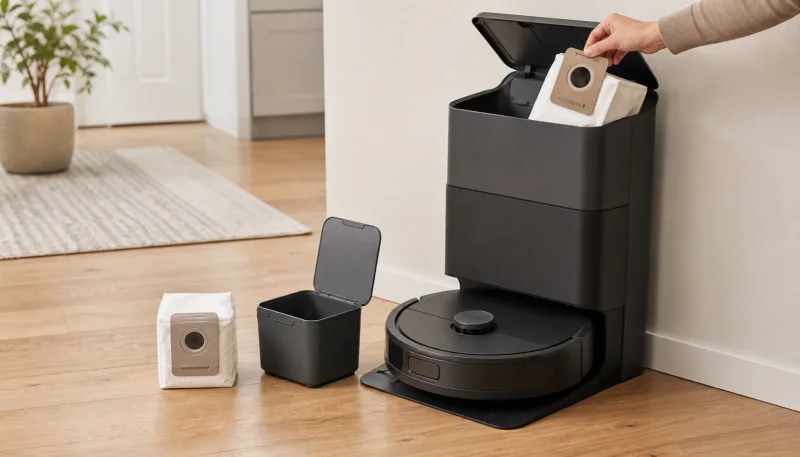
If the odor appears only during the few seconds the dock empties the robot, the dry-debris system is the better suspect. Replace a bag that smells even if it is not full, particularly after pet mess, food crumbs, or accidental moisture. On a bagless RockDock, empty the canister and clean only the washable parts named in the manual.
Inspect the robot bin before installing a new bag. A damp clump left in the robot will contaminate the replacement. The full guide is Robot Vacuum Smells When Emptying? Fix Auto-Empty Dock Odor.
7. Stale clean water or the wrong solution
Clean water can develop a film when it sits for weeks, especially in a warm room. Empty, rinse, and air-dry the clean reservoir before a long gap between mopping jobs.
Use plain water or the Roborock-approved solution specified for the model. Household cleaner, essential oil, and too much detergent can leave residue, foam in the tray, or create a new perfume-plus-sewage smell. See what cleaning solution can you use in a Roborock?.
Model-specific places to check
| Roborock setup | Smell-prone parts |
|---|---|
| Qrevo family with spinning mops | Two mop pads, removable wash tray/filter, dirty reservoir, dust bag |
| S7 MaxV Ultra / S7 Max Ultra | VibraRise cloth, dock wash brush or tray, water filter, dirty reservoir |
| S8 Pro Ultra / S8 MaxV Ultra | VibraRise pad, dock basin/filter, dirty reservoir, dust bag |
| Saros or newer multifunction dock | Mop rollers or pads, cleaning module, dirty reservoir, deodorization-module holder if equipped |
| S7/S8 with basic dock | Mop cloth, onboard clean-water tank, robot bin/filter; there is no dock dirty-water tank |
| Plus auto-empty dock without mop washing | Robot bin, dust bag or bagless canister, air duct; there is no dirty-water reservoir |
Habits that stop the smell coming back
Once every source is clean, prevention is mostly about drying wet parts and removing organic debris:
- Empty the dirty water tank (and the dock’s dirty tank) at the end of every run, not later.
- Let the dock finish drying; remove the pads if they are still damp afterward.
- Wipe down the wash tray weekly.
- Keep wet spills and damp food out of vacuum-only runs.
- Replace a smelly auto-empty bag rather than waiting for the full alert.
- Replace mop pads and filters when they stop coming clean. They’re consumables, not lifetime parts.
Frequently Asked Questions
Why does my Roborock smell bad?
Match the odor to when it happens. Sewage smell at the dock usually means the dirty tank or wash tray; musty odor while mopping means damp pads; and a stale pet or food puff during auto-emptying means the dust bag, robot bin, or air duct. Clean all wet parts and dry them before reassembly.
Why does my Roborock smell bad even after I cleaned the tank?
If the tank is clean but it still smells, it's almost always the mop pads. They stay wet under the robot and turn mildewy, giving a musty, wet-dog smell that's separate from the swampy tank smell. Dry the pads between runs, wash them weekly, and replace them once they smell even after a wash.
Why does my Roborock mop smell musty or like a wet dog?
That specific musty, wet-dog smell comes from the mop pads, not the water tank. Damp pads left on the robot or in the dock grow mildew. Peel them off to dry after each run, machine-wash them every week or two without fabric softener, and swap them out when they stop coming clean.
Why does my Roborock smell like sewage?
A sewage or swampy odor points to used mop water in a self-washing dock's dirty reservoir or wash tray. Empty and rinse the reservoir, scrub its lid, seal, float, and corners, clean the tray and filter, then extend mop drying. Roborocks without a wash dock do not have a dirty-water reservoir.
Why does my Roborock smell only when it empties?
The auto-empty fan is pushing odor from the dry-debris system into the room. Replace the dust bag, inspect the robot bin and filter for damp pet hair or food, clear the air duct, and let every washable part dry fully before installing a new bag.
Why does my Roborock smell burnt?
Stop the robot and unplug the dock. A hot-rubber, melting-plastic, or electrical odor can indicate a jammed brush or wheel, an overheating motor, battery trouble, or a dock fault. Remove obvious hair jams only after power is off, and contact Roborock if the smell returns.